Blackouts Are No Longer a Temporary Problem
For Lebanese enterprises, power blackouts are not short disruptions that can be tolerated or worked around. They are a persistent operational reality that affects every sector, from manufacturing and healthcare to retail, hospitality, and logistics.
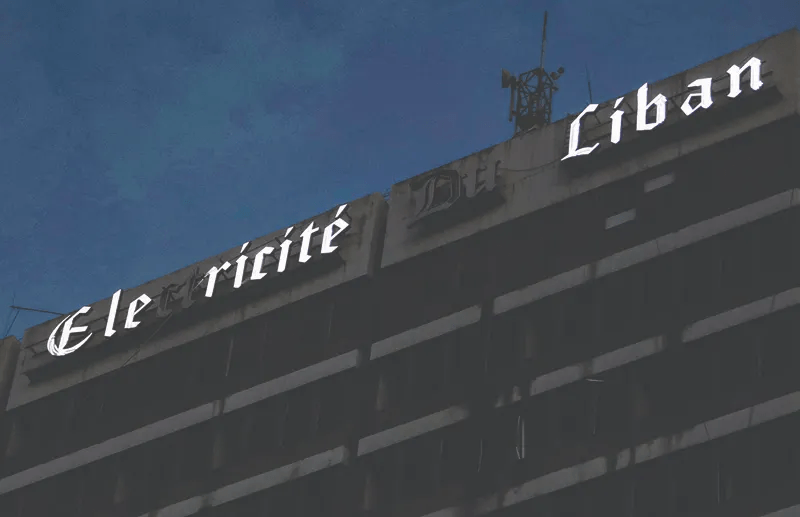
EDL supply can change quickly based on fuel availability. At times it has reached roughly six to eight hours per day nationwide, but it has also dropped sharply during fuel shocks and broader disruptions.
The practical outcome is that a single-source energy setup creates exposure across multiple dimensions: downtime and lost revenue, equipment stress and early failure, safety risks in critical environments, and reputational damage when service levels slip.
A continuity plan that does not include energy resilience is incomplete in Lebanon.
Why Energy Is Central to Business Continuity
Business continuity planning is about keeping critical operations running during disruptions. In Lebanon, energy is the disruption that shows up most often and impacts the widest set of operations.
A simple way to map the impact is to look at what fails first during an outage: connectivity and IT systems (routers, servers, POS systems), cold chain and refrigeration (food, pharma, labs), production equipment (motors, compressors, controls), and customer-facing operations (lighting, HVAC, payments).
Real-life example: a supermarket might stay open with a generator, but if fuel is rationed or the generator trips, even a short interruption can spoil chilled inventory or shut down POS terminals. A clinic can have backup power but still face risk if switching is manual and delayed, or if generator maintenance has been deferred.
This is why enterprises that treat energy as strategic infrastructure, not a utility bill, are better positioned to operate reliably.
Limitations of Traditional Energy Setups
Many enterprises still rely on a fragmented model: grid plus backup generators.
That approach fails continuity tests because it is reactive. It assumes the generator will always start, fuel will always be available, and someone will always be there to manage switching and loads.
It is also financially unstable. Diesel and fuel prices fluctuate and can rise meaningfully over short periods, which makes generator-heavy operations difficult to budget.
A useful internal question for leadership teams is: if the grid drops for several hours today, what is the operational plan besides 'run the generator'? If the answer is 'hope fuel is available' or 'reduce operations,' continuity is not being managed. It is being improvised.
Core Energy Strategies for Business Continuity
Enterprises that move from blackouts to continuity tend to adopt a layered strategy with clear priorities.
A practical continuity-oriented energy strategy usually includes: redundancy (more than one reliable energy source), storage (the ability to ride through switching events and gaps), automation (reduced dependence on human response under pressure), visibility (monitoring that shows what is happening in real time), and maintenance (prevention rather than emergency repair).
Lebanon's rapid shift toward decentralized solar and solar-plus-storage shows how strongly the market has moved toward this model. Reports and expert commentary have described major growth in installed decentralized solar capacity between 2020 and 2023, driven by reliability needs across homes and businesses.
- Redundancy: more than one reliable energy source
- Storage: ability to ride through switching events and gaps
- Automation: reduced dependence on human response under pressure
- Visibility: monitoring that shows what is happening in real time
- Maintenance: prevention rather than emergency repair
How Hybrid Energy Systems Support Continuity
A hybrid energy system combines solar power, battery storage, generators, and grid electricity into one coordinated infrastructure.
Instead of thinking in terms of 'main power' and 'backup power,' the enterprise uses a portfolio of sources managed by priority rules. A typical operating logic looks like this: daytime solar supplies loads and charges batteries, during outage or peak demand batteries respond instantly to keep operations stable, for extended deficit the generator runs only when needed (not all day), and during recovery solar recharges batteries and reduces generator runtime.
This matters because batteries do something generators cannot. They fill the gap between a grid failure and generator stabilization. They also smooth out power quality issues that can harm sensitive equipment.
How Solenergy Builds Business Continuity into Energy Design
Solenergy designs systems around continuity targets, not just panel counts.
The work starts with an operational assessment that translates business needs into engineering requirements. That typically includes: critical loads that must never drop, peak load windows and operational schedules, outage patterns and acceptable downtime thresholds, existing generator capacity and performance, and battery autonomy targets (such as keeping IT, refrigeration, or essential production online for a defined period).
This matters because two businesses with the same monthly consumption can have totally different continuity needs. A factory with a high starting current load needs a different design from a hotel where HVAC and elevators drive peaks.
Solenergy's value is that continuity becomes a design constraint from day one, not a feature added at the end.
Automation and Intelligent Control with Solenergy
A continuity plan often fails during switching. That is when human error, delayed response, and misconfigured priorities create outages even when equipment is available.
Solenergy's approach makes switching automatic. The system coordinates solar, batteries, grid, and generator with predefined priorities. Critical equipment stays powered without waiting for someone to react.
Real-life example: a business running 24/7 cannot afford to rely on 'someone will be on-site to switch sources.' Automation eliminates that dependency and reduces continuity risk at the exact moment risk is highest.
Energy Monitoring as a Continuity Tool
Continuity is not only about having equipment. It is also about knowing what is happening before a failure becomes downtime.
Solenergy supports monitoring and energy management so enterprises can track performance and risk signals such as: battery state of charge trends over time, generator runtime and frequency of starts, solar production versus expected output, and load spikes that threaten stability.
A simple example: if monitoring shows batteries consistently draining earlier than planned, it may indicate load growth, poor scheduling, or equipment degradation. That allows the enterprise to fix the issue before it becomes downtime.
Maintenance and Support as Risk Prevention
Business continuity does not end when the system is commissioned. It fails when maintenance is ignored.
Solenergy offers maintenance and support that moves customers from emergency response to prevention. Preventive maintenance and ongoing monitoring reduce the chance of failure during outages, when systems are under maximum stress.
A useful way to communicate this internally is: maintenance is a continuity policy. Enterprises that treat it as optional eventually pay for it in downtime.
Financial Stability Through Energy Continuity
Continuity has a direct financial impact. Downtime costs are usually larger than leadership expects because they include secondary effects like staff idle time, rushed procurement, emergency fuel purchases, spoiled inventory, delayed deliveries, and customer dissatisfaction.
Hybrid energy strategies reduce those losses and also stabilize energy operating costs by lowering diesel dependency. Fuel volatility becomes less destructive to budgets when generators run fewer hours and only as a last resort.
Many enterprises also find that once energy becomes predictable, they can plan capacity and expansion more confidently.
Why Lebanese Enterprises Must Act Now
Lebanon has experienced severe energy shocks, including periods where fuel shortages led to major supply disruptions and nationwide outage risk.
In this environment, the competitive advantage often goes to the enterprise that stays open, keeps quality stable, and delivers on time while others pause operations. Energy resilience is not a branding story. It is operational leverage.
Solenergy as a Business Continuity Partner
Solenergy positions itself as a long-term partner for enterprises that want energy resilience, not just equipment.
By combining hybrid system design, automation, monitoring, and maintenance support, Solenergy helps businesses shift from reactive power management to continuity-driven energy strategy. This approach fits Lebanon's reality, where continuity depends on managing multiple energy sources reliably, every day.